
L' Antica Pieve di Santa Maria
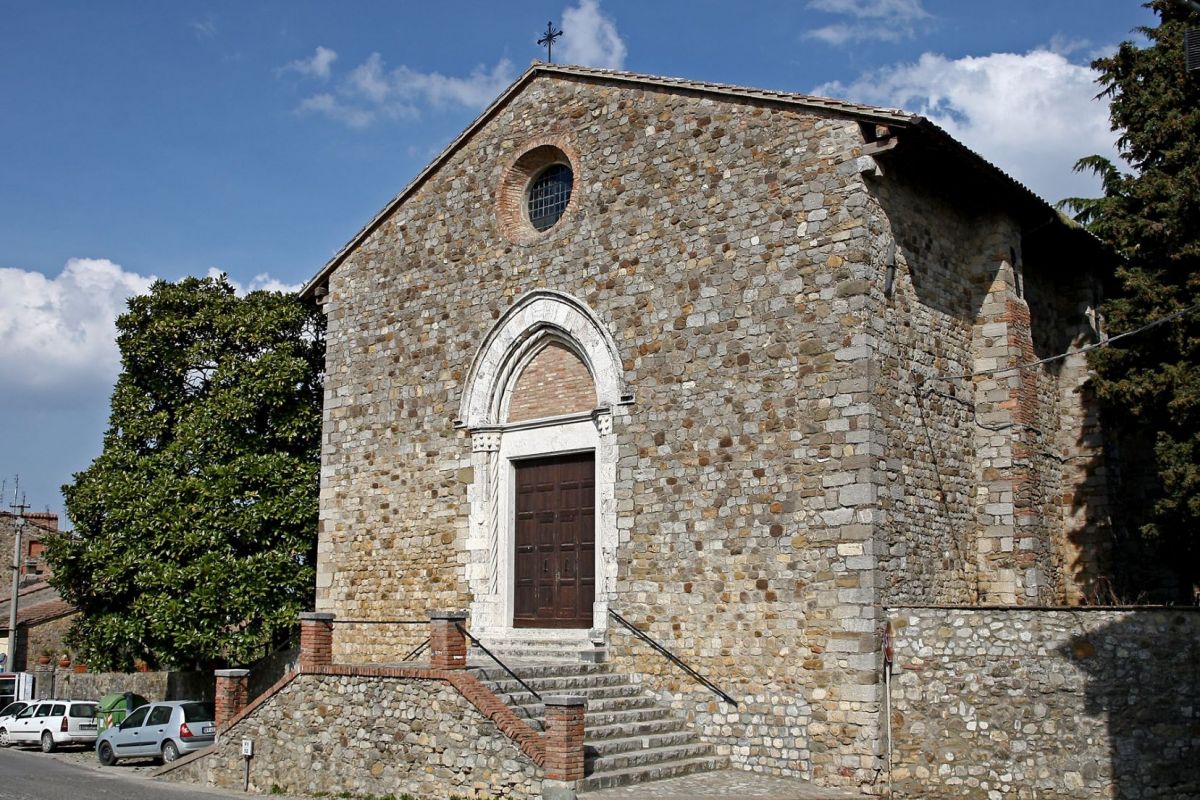
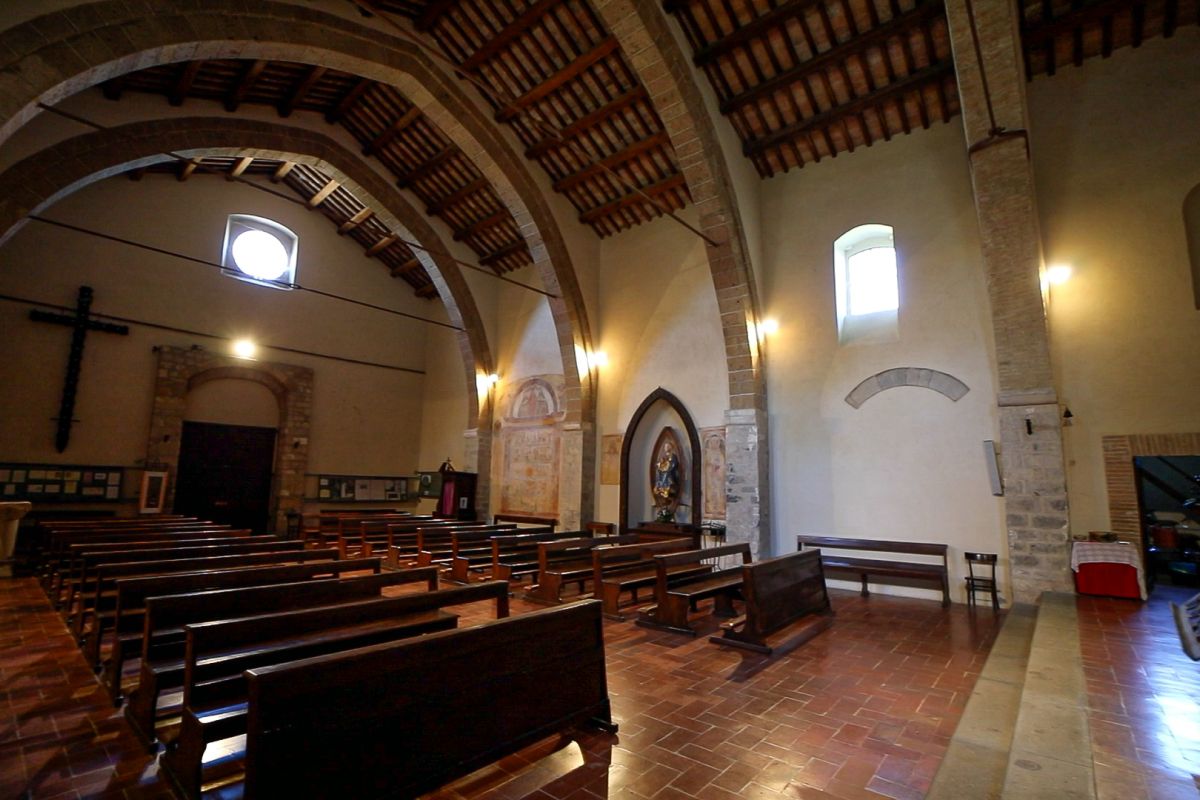
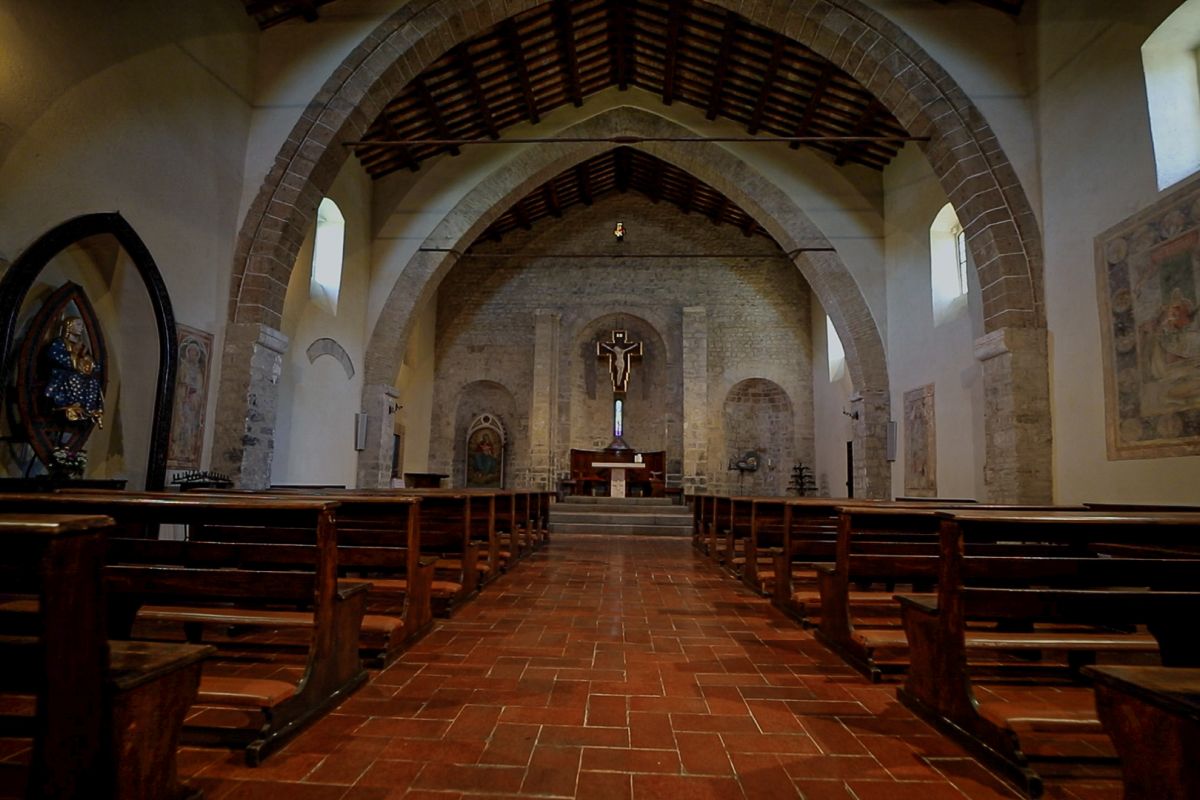
The Antica Pieve di Ficulle, also known as the Church of Santa Maria Vecchia, is the oldest church in the historic center, which already existed in 1292, as revealed by the land registry of Orvieto of that year.
THE HISTORY
Until the early 1600s it was the main place of worship in the town, then all the parish celebrations were transferred to the new church of Santa Maria Nuova , built in 1616 within the city walls. The ancient parish church, which remained immediately outside the walls, gradually declined; it was used only as a burial place and for sporadic liturgical celebrations. Around 1820 it was suspended for worship but already in 1855, the Bishop ordered some interventions to consolidate and recover the building.
After being converted into a warehouse by German troops during the Second World War, the church was restored in the early 1950s by the Civil Engineers, when, among other interventions, the internal plaster was removed and some long hidden frescoes. The last documented restoration is the complete refurbishment of the wooden roof, carried out in 2008.
ART
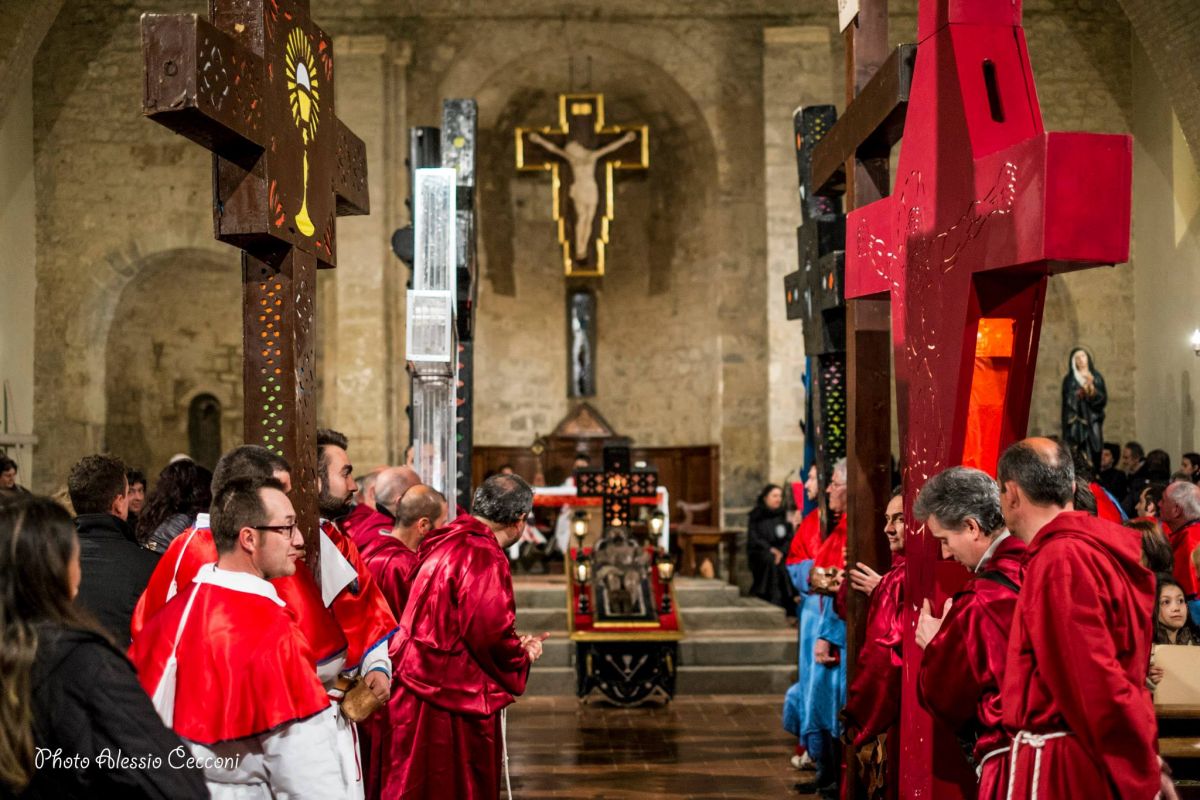
The layout with a single hall, made of sandstone, is essentially in the Gothic style, with the nave marked by pointed arches, in tuff or brick; on the back wall of the presbytery, raised by two steps, there are three semicircular apses, the central one, hosting a seventeenth-century crucifix, larger than the side ones.
The interior preserves some frescoes: on the right wall, a Martyrdom of St. Sebastian from the 14th century, a depiction of the Holy Rosary from the 17th century and a Holy Pontiff dating back to 1476. On the right, a painting from 1600, depicting the Beata Vergine del Carmelo . On the left wall you can admire the representation of the Madonna del Rosario with S. Domenico and S. Pietro Martire that open the mantle under which the devotees, of fifteenth-century invoice, and two Holy Monks, not identified, on the side of the niche, where the valuable wooden statue of the Assumption was once kept (15th century), which unfortunately was stolen in 1982. In its place at the moment we find a statue that intends to remember the one that unfortunately was stolen and of which have been lost.
Inside the church there is a Roman stone, dedicated by Tiberius Claudius, son of Tiberius (first half of the first century AD), to the god Mithras, once used as a baptismal font or holy water font; The exact provenance of it is unknown, although, according to some, it was found in the basement of the church. Popular rumors not proven by historical sources would like this monument to have been placed there in memory of the meeting between Julius Caesar from Gaul and a Roman embassy who came to probe the true intentions of Caesar on his way to his hometown. </ Div>
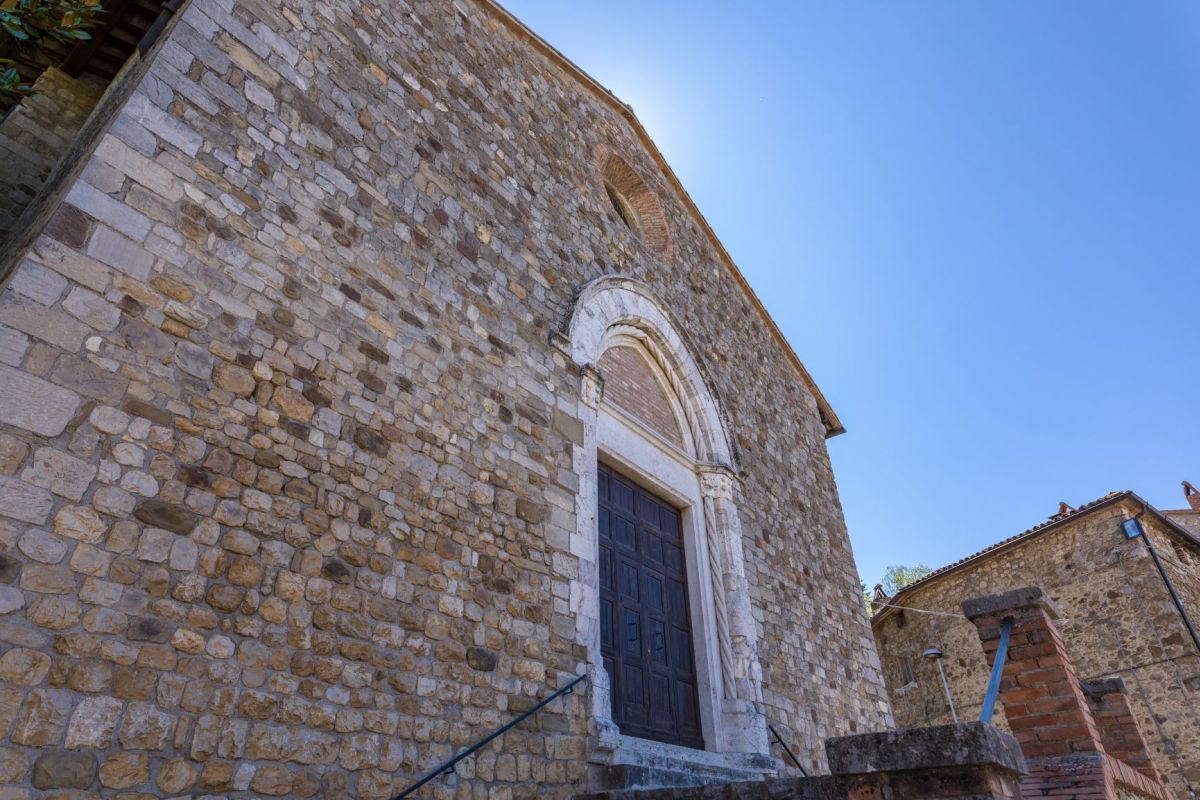
The church, whose entrance is raised from the street level, is accessed via two symmetrical flights of stone steps; the Gothic portal is framed in travertine and there are two twisted columns surmounted by capitals with floral decorations. The external walls are completely in exposed stone.
WORSHIP
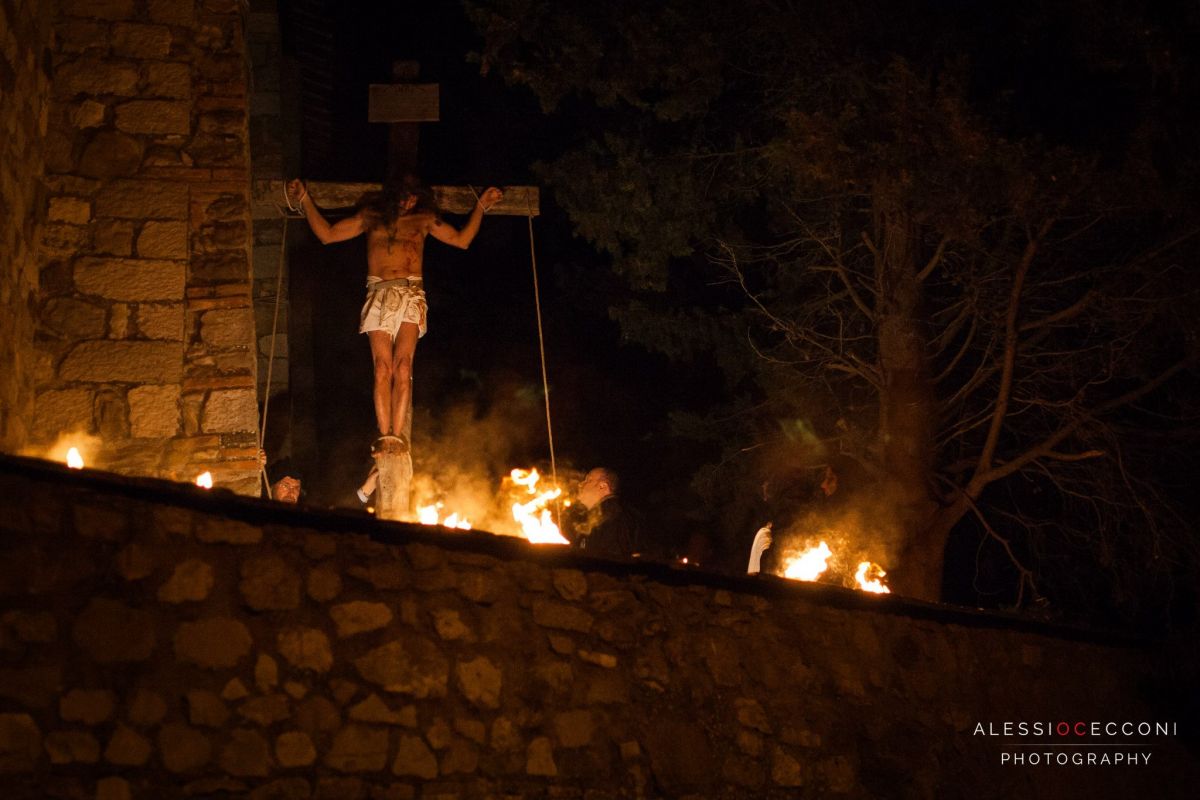
The use of the church today is mainly linked to the Easter rites being the starting point of the Good Friday procession and the Palm Sunday procession, and to the celebration of Our Lady of the Assumption on August 15th. Due to its beauty, it is often chosen for weddings, while the optimal acoustics make it a place of choice for concerts.