
The Castle of the Sala


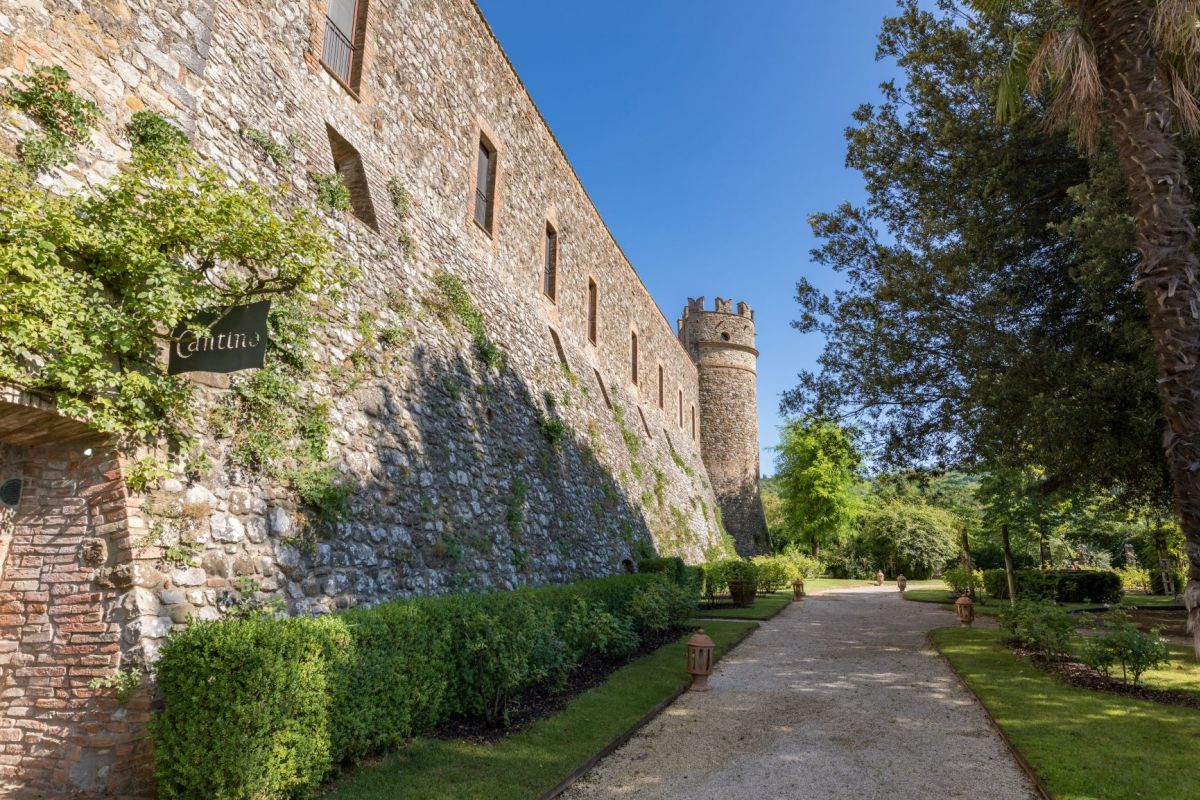


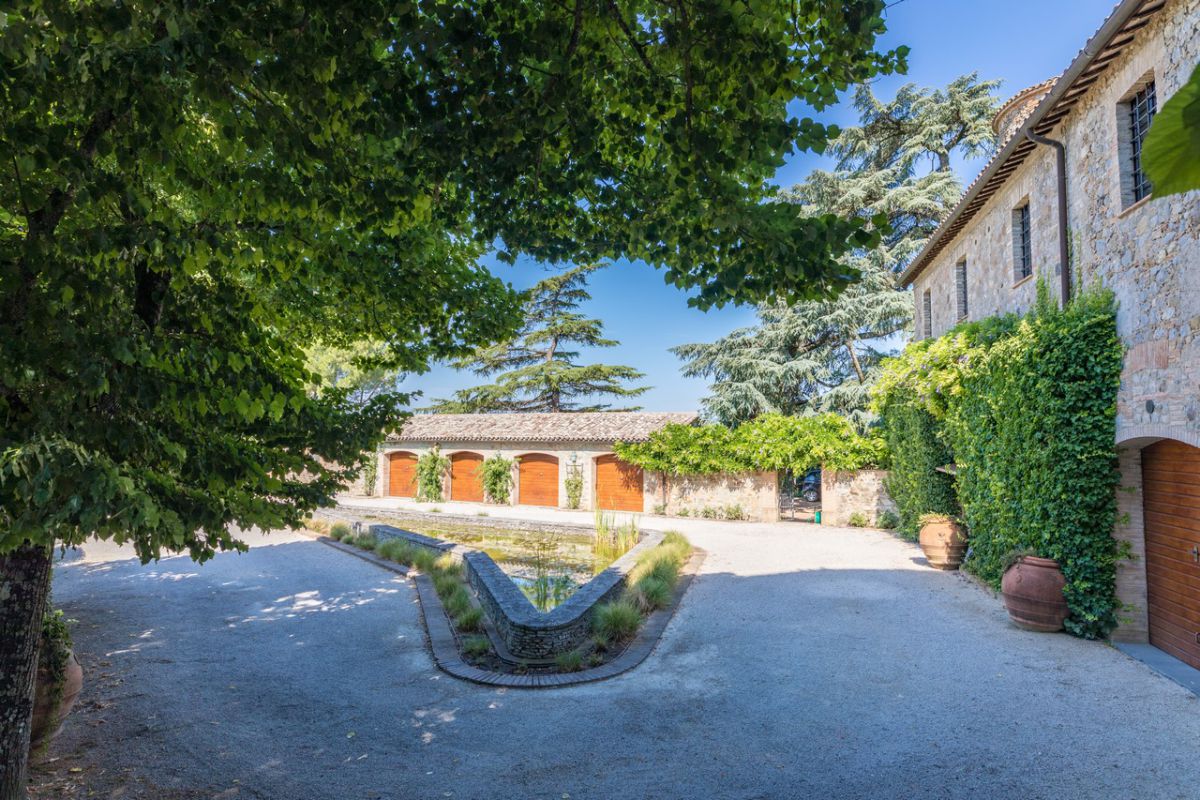


Surrounded by wooded hills, vineyards and olive groves, is the Castello della Sala , a work of admirable medieval architectural beauty, with its manor considered one of the most beautiful in Italy, with its walls, the tower with Ghibelline battlements and the imposing cylindrical tower, located on the southern side.
AN IMPORTANT STORY:
FROM MONALDESCHI TO ANTINORI
It was founded in 1350 by the important and noble Monaldeschi family from Orvieto, a branch of the Vipera, fighting with the other branches of the Dog, Cervara and Eagle. It was a troubled period, marked by clashes, wars and fratricidal struggles for control and domination of the territory. Around the sixteenth century, following the partnership between the Monaldeschi della Vipera and the Monaldeschi della Cervara, the castle experienced a short period of fruitful development, until the donation to the Cathedral of Orvieto in 1516. Thus began a long period of slow decline that it lasted for more than four centuries, until the acquisition of the entire property by the Marquises Antinori, who gave great impetus to the redevelopment and enhancement of the castle and the entire estate.
The purchase of Tenuta della Sala in 1940 by the Marquis Angelo Antinori basically had the aim of allowing the latter to extend their wine production to white wines, to which the Orvieto area has always been particularly suited. At the time of purchase, Tenuta della Sala had 29 farms and 483 hectares of fields and woods, including 52 hectares of olive groves and vineyards.
Although the production of wine, oil and other agricultural products on the estate had been ascertained at least from the 17th century (Morettigiani, 2014), a time when the village of the Castle was inhabited by agricultural laborers who worked on behalf of the Opera del Duomo in Orvieto, at the time of purchase by the Antinori Marquises, the entire property was in a state of semi-abandonment, both as regards the Castle and for agricultural production.
Two objectives pursued in parallel by the Marquis: the recovery of the Castello della Sala, a historical and artistic asset of great value, and the recovery and enhancement of the land on the estate, which is too little exploited for agricultural production in general and wine in particular.
Thus begins a new page of history and a great work of recovery of the Castle, which is gradually restored in full respect of the original forms and materials.
FAMOUS WINE PRODUCTIONS ALL OVER THE WORLD
As for the land, after the purchase of the estate, the Marquis Antinori hires the oenologist Giacomo Tachis and thus starts a period of great transformation in classical viticulture. Based on a critical review of the Chianti wine region, it was decided to concentrate the rows of vines in 'specialized vineyards' in Umbria rather than in the large traditional fields, composed of vineyards scattered together with other crops. The land is being improved at the same time to allow a flourishing wine-growing activity. This choice is destined to change the face of the rural landscape, which is thus redeveloped and enhanced while respecting its essential morphological and use characteristics. Uncultivated lands are worked and improved to accommodate vineyards; a little everywhere on the estate the plots destined to the rows multiply. A landscape that changes, while respecting its origins and its agricultural vocations, and in which the whole local community (both the autochthonous one and the more recently added one) identifies itself, making the restored Castello della Sala and the beauty of its lands a place of identity, peculiarity and symbol of the whole territory.
In 1961 the Castello della Sala received official recognition from the Italian Ministry of Agriculture for the excellent levels of production achieved. This marks the fate of the Castello della Sala estate destined from then onwards, especially after the arrival of the agronomist Renzo Cotarella, to be the cradle of prestigious wines, appreciated and known all over the world, first of all the famous Cervaro della Sala. , presented in 1985 and famous for being one of the most popular Italian white wines in the world.
EXAMPLE OF SUSTAINABLE DEVELOPMENT CANDIDATED FOR THE EUROPEAN LANDSCAPE AWARD
Gro Harlem Brundtland, during his presidency of the World Commission for Environment and Development (WCED) made the famous statement that « sustainable development, far from being a definitive condition of harmony, is rather process of change such that the exploitation of resources, the direction of investments, the orientation of technological development and institutional changes are made consistent with future needs as well as with current ones ".
This sentence is well suited to the process applied in the case of the Castello della Sala estate and is the reason why in 2016 it was nominated as an Italian representative for the European Landscape Award.
Many scholars agree that the contemporary agricultural landscape originated in the Renaissance, when the first practices of clearing and specific planting began to take hold (Sereni, 1961). Since then, agriculture has been the main instrument of anthropization of the natural environment and the basic structure of every rural environment.
The purchase of the Castello della Sala estate by the Antinori marquises in 1940 and aimed at the production of wine clearly entailed an evolution of the territory and of the agriculture historically practiced in it. However, it was an evolution managed and organized in an extremely modern way, according to the logic that today we would define as "sustainable anthropocentrism", which have been able to combine the needs of business development with those of protection and conservation of the environmental, social and aesthetic values of the landscape. . An interesting example of this approach is the way in which the exploitation of the land for the production of wine and the planting of new vineyards has been done in respect of the mixed culture that has characterized central Italy since the sharecropping period, in particular of coexistence. history of the two key elements of the landscape, the vine and the olive tree. This is a typical and original feature of the whole of central Italy which unfortunately is being lost in several areas due to a prevarication of the vine on the olive tree which is extremely harmful to the landscape as it erodes a consolidated landscape and territorial balance ( Pazzagli, 2012). This did not happen in the case of the Castello della Sala estate where the harmony of the landscape and its authenticity is due to sustainability choices like this. At the same time, however, the intervention carried out by the Marquises Antinori helped to enhance and enrich the landscape and to develop new qualities in it both for the production of very high quality wine (whose union with the territory is essential) and for the attractiveness tourist places.
WINE TOURISM
In recent years the phenomenon of wine tourism has grown exponentially, making the Castello della Sala a privileged destination for numerous visitors attracted by the quality of the tastings but also by the beauty of the landscape in which they are carried out. To get an idea of the phenomenon, just think that the average number of visitors per year is around 1500 units.
THE MARQUIS ANTINORI AND RENZO COTARELLA HONORARY CITIZENS OF FICULLE
It should be emphasized that in parallel with these objectives of recovery and enhancement of historical and artistic heritage and the rural landscape, the intervention carried out in the Castello della Sala estate also pursues a social and economic development objective of the territory. In fact, over 60 workers are employed permanently or seasonally on the estate, with entire families living off the economy created by this important productive reality. For this reason, recognizing its important driving role in the processes of historical-cultural enhancement and sustainable development of the territory, the municipal administration of Ficulle in 2017 granted honorary citizenship to the Marquis Piero Antinori and the oenologist Renzo Cotarella.
