
The Sanctuary of the Madonna Della Maestà

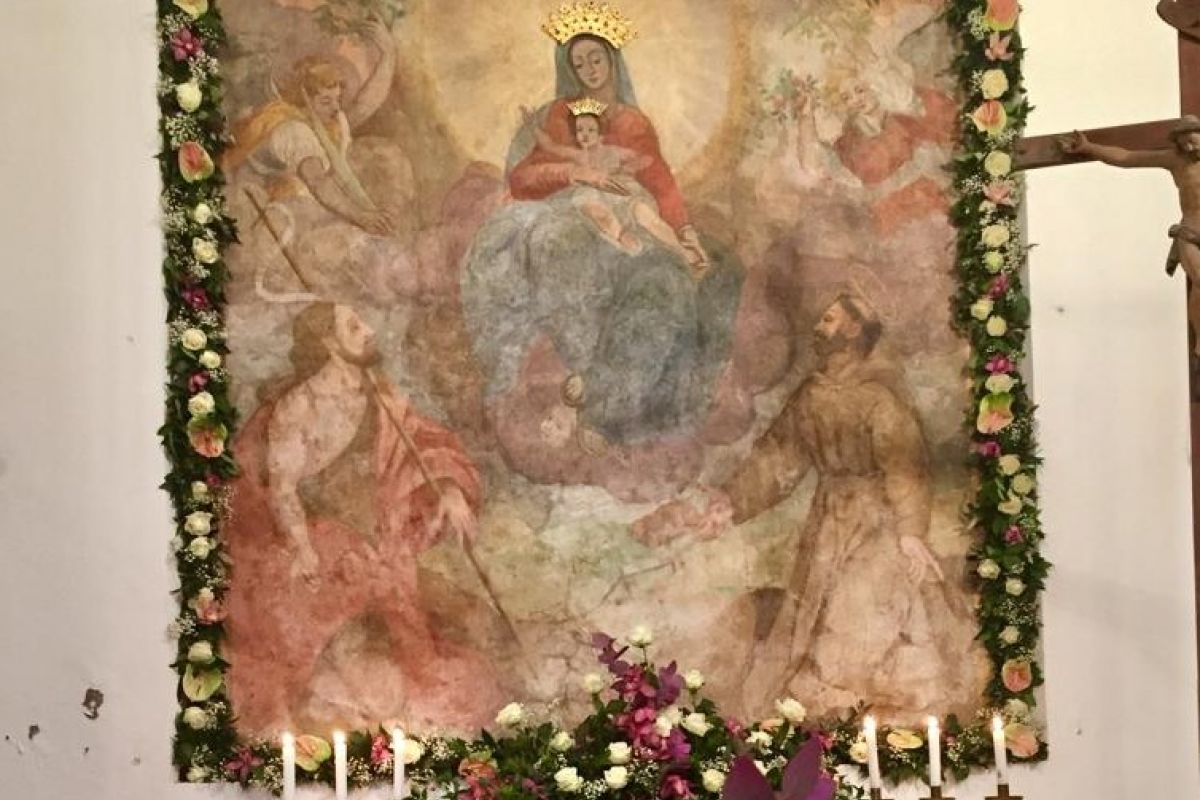

The Sanctuary of the Madonna della Maestà is located not far from the town. At the origin of the building there is the great devotion of the inhabitants of the village to a Marian fresco depicting the Madonna Regina surrounded by angels in glory with the Child Jesus and with Saint John the Baptist and Saint Francis beside of Assisi.
THE HISTORY
The first historical information relating to the Sanctuary of the Majesty can be found in the official reports of the pastoral visits of Cardinal Sannesio in 1606 and 1616. According to what is reported in the reports, in fact, the high prelate went to a church outside the walls, not far from the town, dedicated to the Blessed Virgin Mary who was already then invoked with the title of Maiestatis.
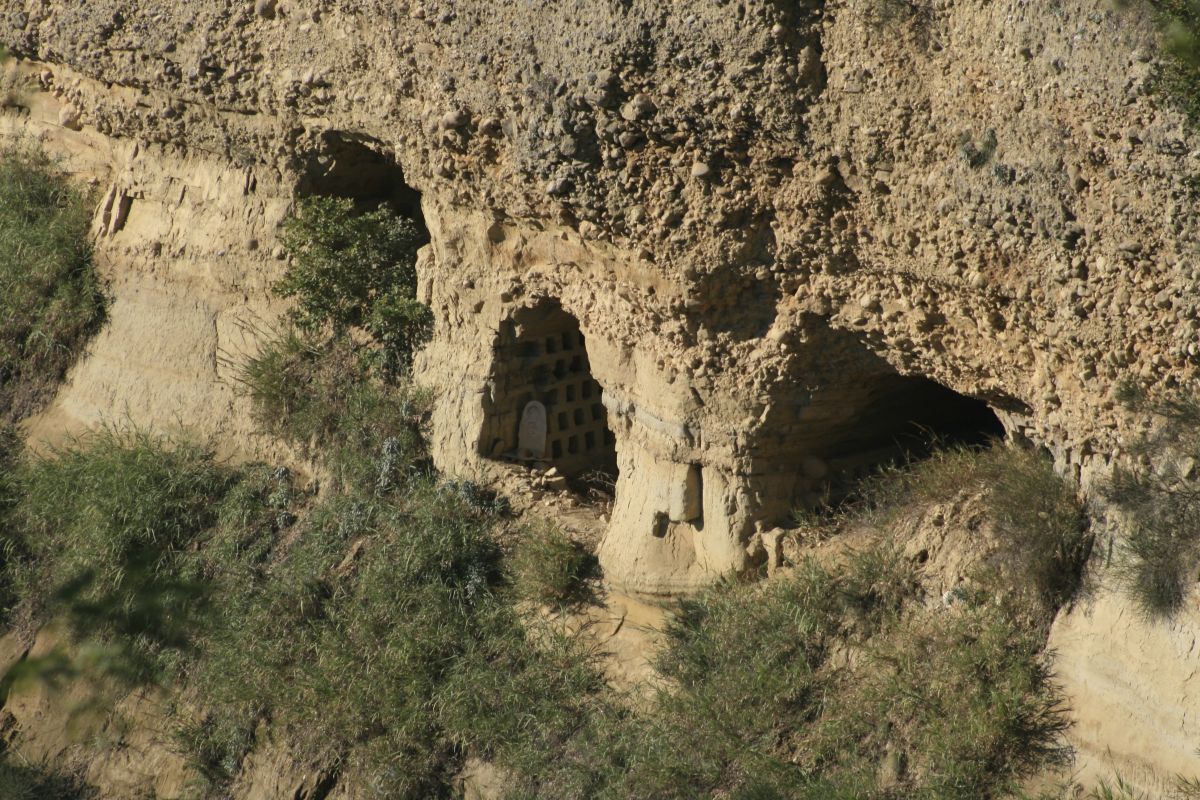
These are the first written testimonies of a cult that certainly dates back even further in time and whose origins are fixed by legend in the miraculous discovery of the sacred image in the sixteenth century in the ancient caves existing near the town.
In fact, it is said that in one of the caves overlooking the current Sanctuary, an image depicting the Madonna Regina was found, which, with a solemn procession, was carried by the faithful to the Parish Church. The following day, however, the painting had returned to his cave; he was brought back to the church with greater honors, but again mysteriously came back. The Ficullesians interpreted this sign as the intention of the Madonna to remain near those caves and for this they erected a small chapel, where the image was placed, from which it was possible to see them. And since then, thanks to this act of respect and faith, Mary's eyes have entered the deep caves of the soul of the many faithful who have sincerely opened their hearts to trustfully entrust the anguish and painful events of life to Our Lady. of the Majesty, finding comfort and hope in the maternal love of the Consoler of the afflicted.
Without claiming historical value and objectivity, the legendary origins of the sanctuary well represent the love and devotion of the Ficulesi people for Majesty. Love and devotion which then found confirmation in the whole subsequent history of the Shrine. Suffice it to say that during the Second World War the entire population of Ficullo relied on the Madonna della Maestà to protect the town and its inhabitants from bombing. At the end of the war the population dissolved the vow of custody and as thanks to the Virgin donated gold and donations, thanks to which it was possible to create a diadem with which the Diocesan Bishop Mons. Francesco Pieri crowned the sacred image of the Madonna della Maestà on 22 August 1954 on behalf of Pope Pius XII.
PILGRIMAGES
The Feast of Majesty is celebrated on November 21, liturgical memorial of the Presentation of the Blessed Virgin Mary in the Temple. For the occasion, many faithful from all over the Orvieto area but also from further afield go to the Sanctuary, which becomes a pilgrimage destination for the whole day, and participate in the Sacraments of Confession and the Eucharist thanks to intercession and Maternal love of Mary. On the day of the feast, the Eucharistic celebrations follow one another throughout the day, on an hourly basis, starting at 5 in the morning.
The Marian cult, however, is not limited to the day of the feast and many people go there all year round on a pilgrimage to the Sanctuary of the Madonna della Maestà to pray and request the intercession of the Virgin and there are numerous ex-votos inside the Sanctuary as evidence of the graces received.
THE MIRACLE OF HANGERS
Elisa was a poor woman who lived during the 1800s, suffering from a serious illness that caused her progressive paralysis of the legs . With constancy, whenever the help of a neighbor made it possible, she went to the shrine of the Majesty, dragging herself on her poor crutches. she With strength and faith she raised her prayers to Our Lady asking for help and help in facing the painful path of the disease.
One day, without anything to predict, while he was praying in front of the image of Our Lady of Majesty she had the ability to stand up, miraculously starting to walk without support. Elisa with an act of love and gratitude gave the Madonna her crutches, a sign of her suffering and of the grace received. < / span> Even today Everyone can see them hanging on the walls of the Sanctuary together with the many ex-votos, a sure symbol of a profound faith that continues in the heart of the Community of Ficulle.